
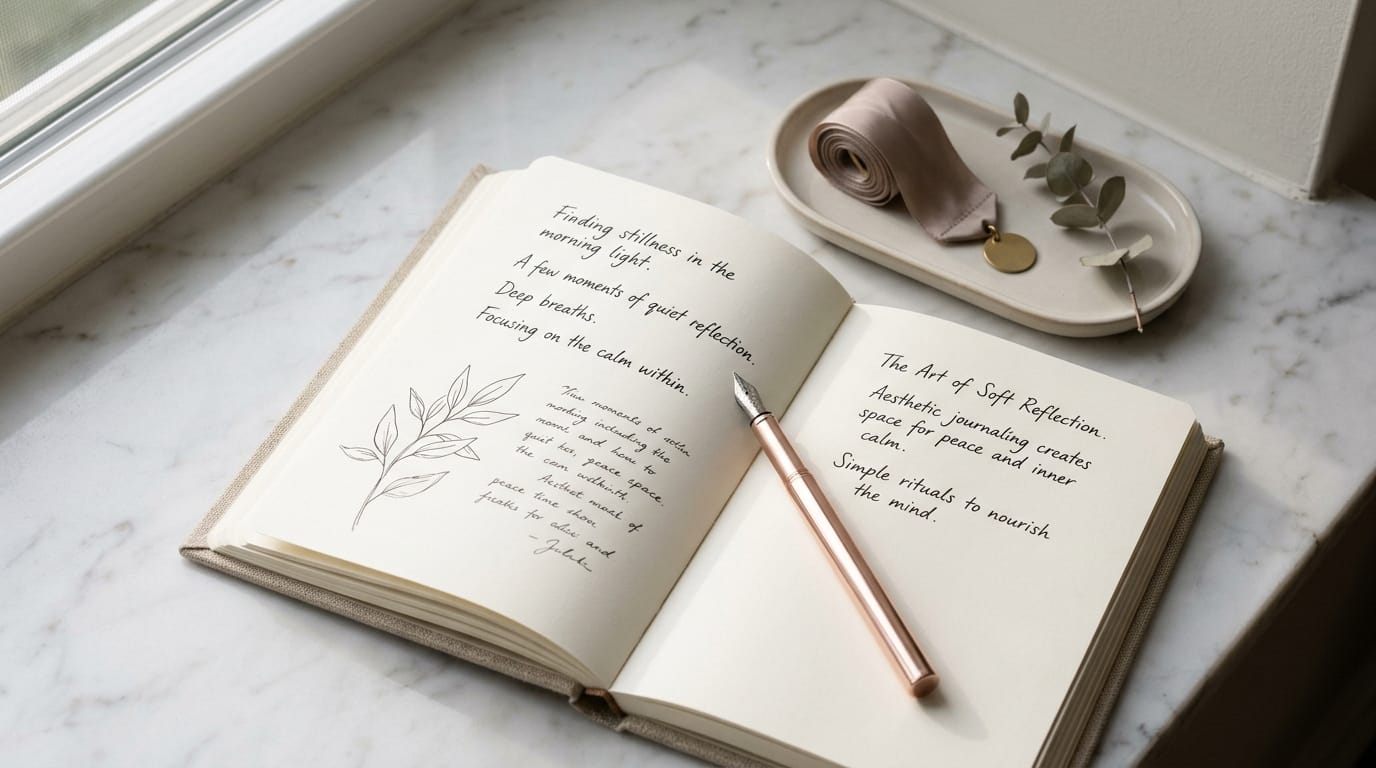
In a world that demands constant productivity, aesthetic journaling offers a gentle rebellion—a return to beauty, intention, and the profound power of soft reflection. This isn’t about tracking goals or measuring progress; it’s about creating a sacred space where your thoughts can unfold like silk across cream-colored pages.
Moving Beyond the Digital Drain: Why Aesthetic Journaling Matters
The art of aesthetic journaling transcends mere documentation. Unlike hurried digital notes or productivity-focused planning, this practice invites you to slow down and savor each moment of reflection. When you choose a journal that feels like a treasured object—perhaps bound in linen with gold foil details—the very act of opening it becomes a ritual of self-care.
Your journal becomes more than a tool; it transforms into a beautiful artifact that reflects your refined sensibilities. The weight of quality paper, the smooth glide of a fountain pen, the gentle rustle of turning pages—these sensory elements create an experience that nurtures both mind and spirit.
Creating Your Sanctuary Space for Soft Living Ritual
The foundation of meaningful reflection begins with curating a space that feels like a personal sanctuary. This isn’t about perfection—it’s about intention. Consider these elements for your journaling ritual:
- Lighting: Soft morning light or the warm glow of a candle creates an atmosphere of tranquility
- Textures: A silk scarf as a writing surface, or a small marble tray for your pens
- Fragrance: A gentle lavender mist or the natural scent of quality paper
- Color palette: Muted tones that speak to your aesthetic—perhaps the trending cobalt blues or warm creams
Your sanctuary space signals to your mind that this time is sacred, distinct from the rushing demands of daily life.
The Morning Pages Habit: An Opening Ceremony
The morning pages habit offers a gentle way to begin each day with clarity rather than chaos. This practice involves writing three pages of stream-of-consciousness thoughts, but we elevate it through aesthetic intention. Choose a journal that makes you smile, use a pen that feels luxurious in your hand, and allow your thoughts to flow without judgment.
This isn’t about productivity—it’s about creating space for your authentic voice to emerge. Some mornings, you might find yourself writing about the way sunlight filters through your curtains. Other days, you might explore a feeling that needs gentle attention. The beauty lies in the freedom to let your thoughts unfold naturally.
Emotional Regulation Through Beautiful Reflection
True aesthetic journaling serves as a sophisticated tool for emotional regulation. Rather than simply venting frustrations, we approach our feelings with the same care we give to arranging flowers or setting a beautiful table.
Consider creating dedicated sections in your journal for different types of reflection:
- Grace Notes: Moments of unexpected beauty or kindness
- Gentle Processing: Working through challenges with compassion
- Intention Setting: Quiet declarations of how you want to feel
- Gratitude Gathering: Collecting the small treasures of daily life
This approach transforms difficult emotions from obstacles into opportunities for deeper self-understanding, all while maintaining the aesthetic harmony that nurtures your spirit.
Crafting Your Commonplace Book Legacy
The tradition of keeping a commonplace book offers another layer to your reflective practice. This becomes a curated collection of wisdom—beautiful quotes, pressed flowers, meaningful passages, or sketches that capture your aesthetic sensibilities.
Unlike a traditional diary, your commonplace book becomes a legacy piece, something you might pass down or treasure for years to come. Each entry is chosen with intention, creating a visual and intellectual feast that reflects your evolving taste and wisdom.
The Quiet Luxury Stationery Experience
Investing in quiet luxury stationery isn’t about status—it’s about honoring the importance of your inner world. When you write with a pen that feels substantial, on paper that doesn’t bleed or feather, you’re making a statement about the value of your thoughts and feelings.
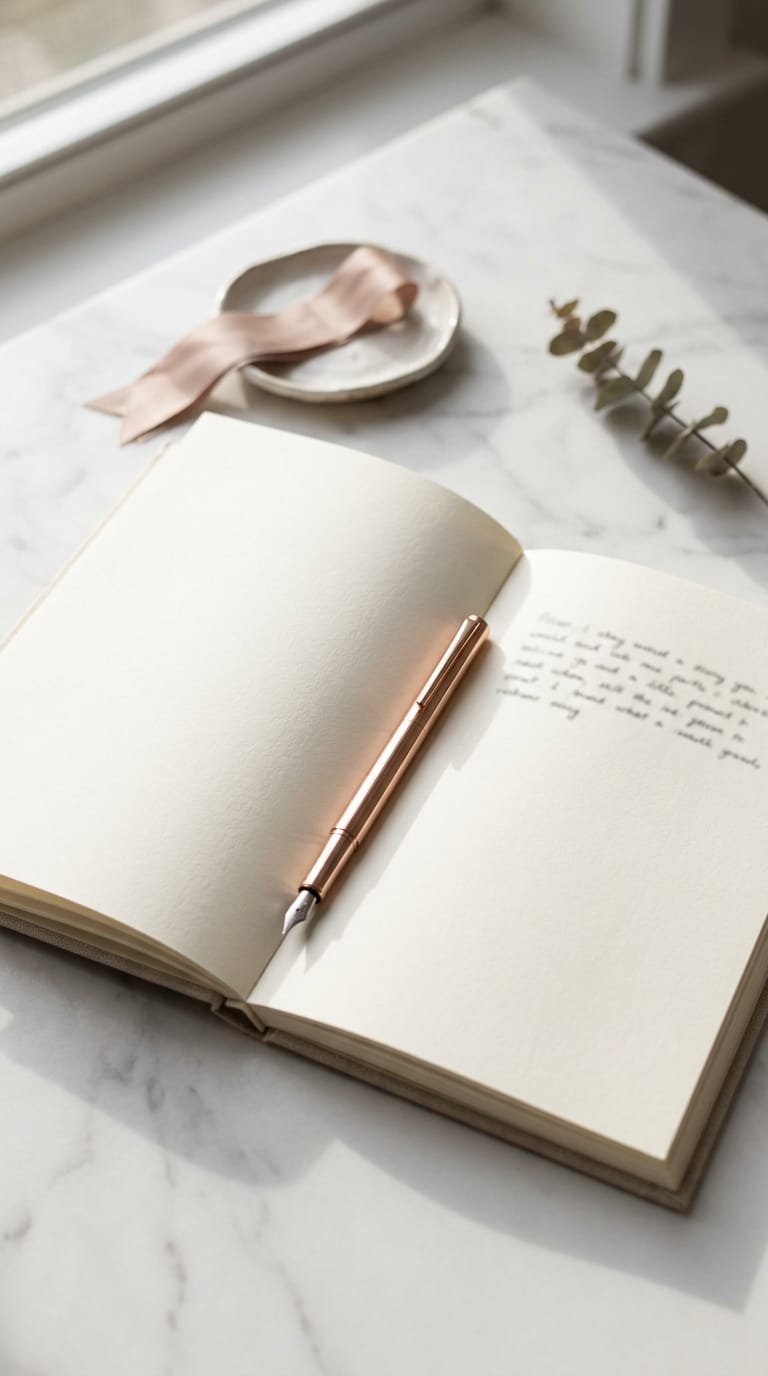
Consider these elements when curating your writing tools:
- Paper weight and texture that feels substantial
- Binding that opens smoothly and lies flat
- Ink that flows effortlessly without smudging
- Colors that harmonize with your personal aesthetic
These details might seem small, but they create an experience that makes you want to return to your practice daily.
The Closing Ceremony: Ending with Grace
Just as you begin your journaling with intention, ending with a gentle closing ceremony completes the circle of reflection. This might involve writing a single word that captures the essence of your session, or simply taking a moment to appreciate the pages you’ve filled.
Some practitioners enjoy placing a silk ribbon bookmark to mark their place, or adding a small pressed flower to commemorate meaningful entries. These small rituals create closure and anticipation for your next reflective moment.


The CHARMPOSH® 2026 Planner in Chic Pink and Deep Red Stripes is a curated essential for those who view planning as a daily ritual of beauty. It transforms organization from a task into an intentional lifestyle choice.
– Sophisticated pink and deep red stripe aesthetic
– Refined design that complements a quiet luxury workspace
– High-quality finish for a tactile, indulgent experience
Secure your 2026 edition via the link below.
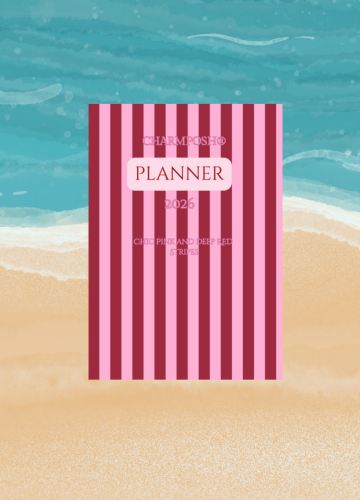
CHARMPOSH® PLANNER 2026 CHIC PINK AND DEEP RED STRIPES
As an affiliate, I may earn a commission from qualifying purchases made through links in this post.
Frequently Asked Questions
How is aesthetic journaling different from regular journaling?
Aesthetic journaling emphasizes the visual and sensory experience alongside emotional reflection. It involves curating beautiful stationery, creating visually pleasing layouts, and treating the practice as a form of self-care ritual rather than just a productivity tool.
What supplies do I need to start aesthetic journaling?
Begin with a high-quality journal that appeals to your aesthetic sensibilities, a smooth-writing pen, and a dedicated quiet space. Optional additions include washi tape, pressed flowers, quality markers, and beautiful accessories that enhance your writing ritual.
How long should I spend on aesthetic journaling each day?
There’s no required time commitment. Some people enjoy 10-15 minutes of morning reflection, while others prefer longer weekend sessions. The key is consistency and intention rather than duration—quality over quantity.
Can aesthetic journaling help with mental health?
Yes, the practice combines the proven benefits of expressive writing with the calming effects of engaging in beautiful, mindful activities. The aesthetic elements can enhance mood and make the practice more appealing and sustainable.
What’s the difference between a commonplace book and a journal?
A commonplace book focuses on collecting external wisdom—quotes, ideas, observations, and inspiration from various sources. A traditional journal typically contains personal thoughts, experiences, and reflections. Many people enjoy maintaining both or combining elements in one beautiful book.
Leave a Reply