
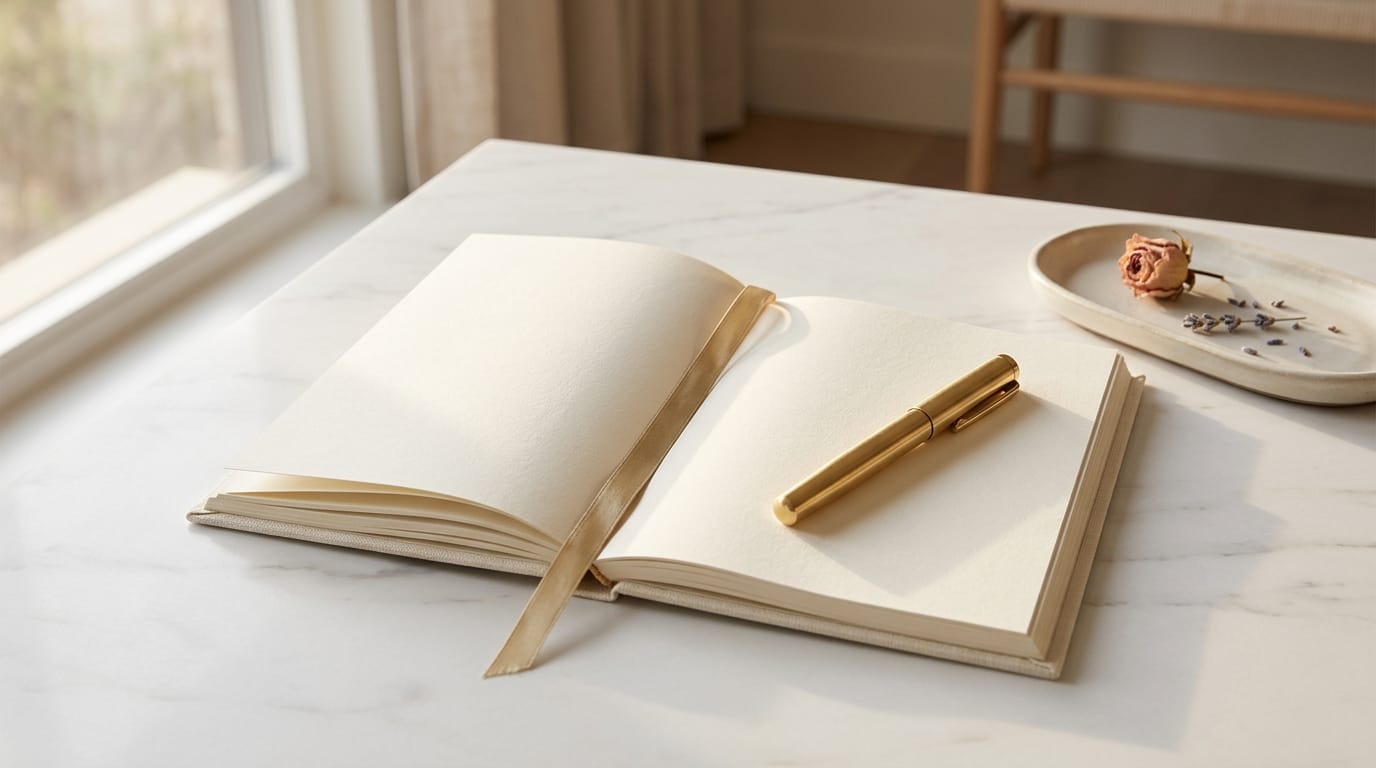
In the realm of refined living, aesthetic journaling transcends mere documentation—it becomes a sacred ritual that honors both beauty and intention. The art of opening and closing ceremonies transforms your daily writing practice into moments of profound elegance, creating sanctuary within your routine.
Defining the Sacred Rituals of Aesthetic Journaling
Opening and closing ceremonies are intentional transitions that bookend your day with grace. Unlike productivity-focused journaling, these rituals prioritize sensory beauty and emotional resonance. The opening ceremony awakens your consciousness with gentle intention, while the closing ceremony creates peaceful closure.
These rituals honor the Japanese concept of mono no aware—the bittersweet awareness of life’s ephemeral beauty. Each ceremony becomes a curated moment of self-care, transforming ordinary journaling into extraordinary self-communion.
Why Physical Writing Signals the Brain for Aesthetic Journaling
Neuroscience reveals that handwriting activates the reticular activating system differently than digital input. When pen meets paper, your brain enters a meditative state that promotes deeper reflection and memory consolidation.
The tactile experience of quiet luxury stationery enhances this neurological response. The weight of quality paper, the smooth glide of a fountain pen, and the visual harmony of your setup create a multisensory experience that signals intentionality to your subconscious mind.
Research from Princeton University demonstrates that handwriting improves comprehension and retention by 47% compared to typing. For the aesthetic practitioner, this means your journaling and daily reflections become both beautiful and deeply meaningful.
The Art of Morning Pages Habit: Opening Ceremonies
Your morning opening ceremony should unfold like a delicate flower. Begin by lighting a candle or diffusing lavender oil to create olfactory cues for your ritual space. Arrange your writing materials with the same care you’d give to setting a table for honored guests.
Five-Minute Morning Prompts for Elegant Awakening:
- “What beauty do I wish to create today?”
- “How can I move through today with grace?”
- “What three intentions will guide my choices?”
- “Which moments deserve my full presence?”
- “How will I honor my authentic self today?”
Write in flowing script, allowing thoughts to emerge naturally. The goal isn’t productivity—it’s presence.
Creating Your Soft Living Ritual: Evening Ceremonies
Evening ceremonies require different energy—softer, more reflective. Dim harsh lighting and perhaps play gentle instrumental music. Your closing ritual should feel like wrapping yourself in cashmere.
Five-Minute Evening Prompts for Peaceful Closure:
- “What moments of beauty did I witness today?”
- “How did I show kindness to myself and others?”
- “What am I grateful to release from today?”
- “Which experiences deserve to be remembered?”
- “How can tomorrow unfold with more ease?”
Consider creating a commonplace book section where you record meaningful quotes, observations, or insights from your day. This practice transforms your journal into a curated collection of wisdom.
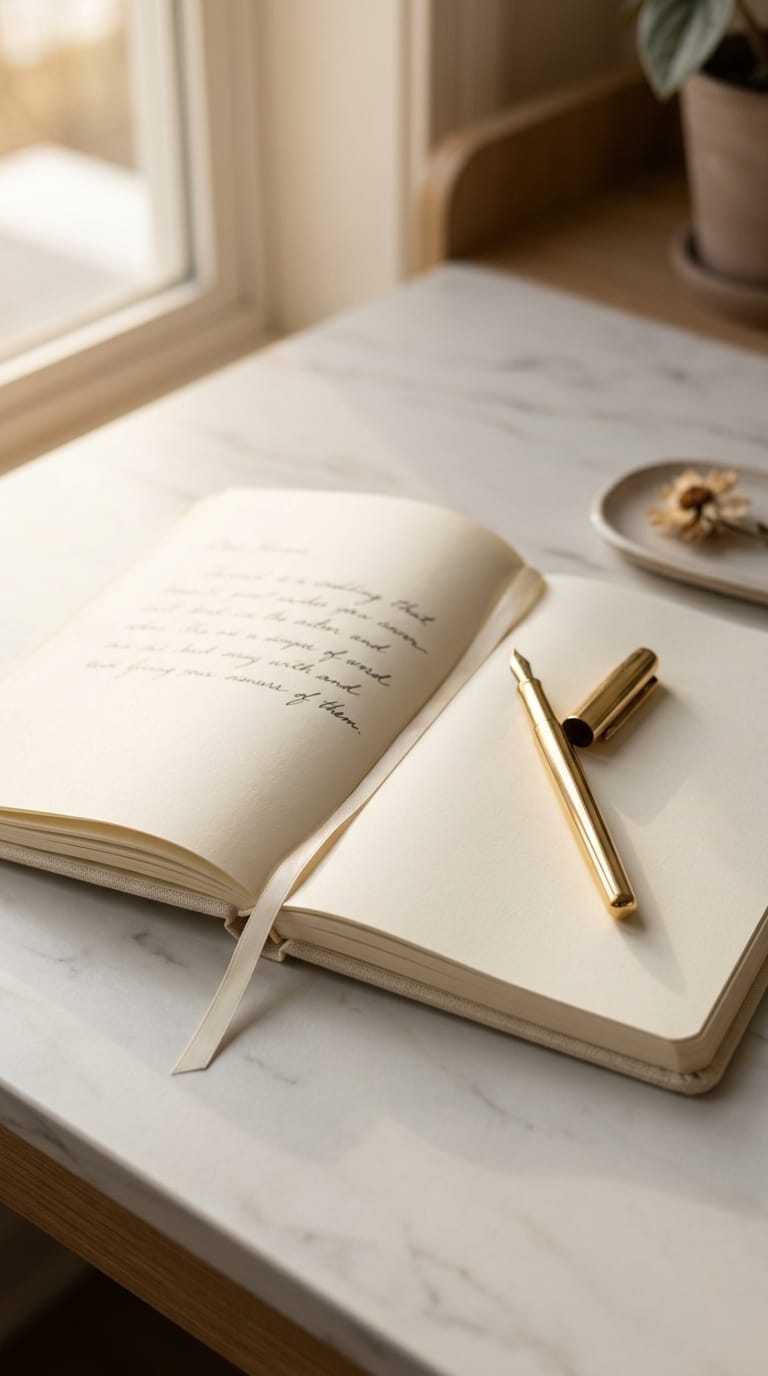
Curating Your Sacred Writing Space
Your journaling environment should reflect your aesthetic values. Choose a consistent location that feels like a personal sanctuary. Invest in quality stationery that brings you joy—perhaps linen-bound journals with silk ribbons or fountain pens that feel substantial in your hand.
Arrange fresh flowers, display meaningful objects, and ensure adequate natural light. Your space should whisper luxury rather than shout productivity. Remember, this is about creating beauty, not checking boxes.
The Philosophy of Intentional Aesthetics
True aesthetic journaling embraces the belief that beauty and function are inseparable. When your tools and rituals are carefully chosen, your thoughts naturally align with higher intentions. This isn’t vanity—it’s an acknowledgment that our external environment shapes our internal landscape.
Consider your journals as future heirlooms, documents of a life lived with intention and grace. Years from now, these volumes will remind you not just of what you did, but of how beautifully you lived.


The CHARMPOSH® 2026 Planner in Chic Pink and Deep Red Stripes is a curated essential for those who view planning as a daily ritual of beauty. It transforms organization from a task into an intentional lifestyle choice.
– Sophisticated pink and deep red stripe aesthetic
– Refined design that complements a quiet luxury workspace
– High-quality finish for a tactile, indulgent experience
Secure your 2026 edition via the link below.
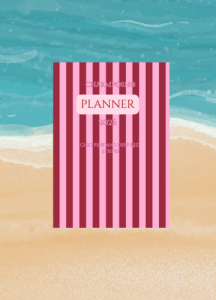
CHARMPOSH® PLANNER 2026 CHIC PINK AND DEEP RED STRIPES
As an affiliate, I may earn a commission from qualifying purchases made through links in this post.
Frequently Asked Questions
What supplies do I need for aesthetic journaling ceremonies?
Essential supplies include a high-quality journal with thick paper, a fountain pen or quality gel pen, a small candle or diffuser, and a dedicated writing space. Choose items that bring you joy and reflect your personal aesthetic rather than focusing on expensive brands.
How long should opening and closing ceremonies take?
Each ceremony should take 5-10 minutes maximum. The goal is consistency and intention, not duration. Brief, beautiful moments are more sustainable than lengthy sessions that feel burdensome.
Can I adapt these rituals if I have a busy schedule?
Absolutely. Even a 2-minute ceremony with a single prompt can be transformative. Focus on the quality of presence rather than the quantity of time. Consistency matters more than perfection.
What if I miss a day of my journaling ritual?
Approach missed days with grace and self-compassion. Simply return to your ritual the next day without judgment. The aesthetic approach values gentleness with yourself over rigid adherence to schedules.
How do I make my journal pages look aesthetically pleasing?
Focus on consistent handwriting, leave white space for visual breathing room, and consider using one or two coordinating colors. Beauty in journaling comes from intention and care, not artistic skill. Simple elegance trumps complex decoration.
Leave a Reply